Choosing the Right Granulator: A Complete Guide
Selecting the right granulator machine is one of the most important decisions for a plastic recycling operation. The wrong choice can lead to bottlenecked production, inconsistent output quality, excessive energy costs, and frequent maintenance headaches. This guide walks you through the key factors to consider.
1. Understand Your Material
Different plastics have different properties, and the granulator you choose must be suited to handling them effectively:
- Soft/flexible materials (PE films, PP bags): Require open-rotor designs with tangential cutting action to prevent wrapping around the rotor.
- Rigid/hard materials (PET bottles, HDPE containers, ABS parts): Need heavy-duty granulators with strong rotor inertia and robust cutting chambers.
- Engineering plastics (nylon, polycarbonate): Require precision-ground blades and tighter tolerances for clean cuts.
2. Determine Required Throughput
Granulators are available in a wide range of capacities, from 50 kg/hr for small beside-the-press units to over 2000 kg/hr for central granulation systems. To choose correctly:
- Calculate your average and peak hourly waste volume.
- Add a 20–30% buffer above your peak requirement.
- Consider future growth, as upgrading a granulator is costlier than choosing a slightly larger one upfront.
3. Choose the Right Rotor Type
The rotor design significantly affects cutting performance and energy efficiency:
- Open rotors: Best for bulky, hollow parts and film. They allow material to flow freely through the cutting zone.
- Closed/solid rotors: Ideal for heavy, thick-walled parts. They provide high inertia for powerful cuts.
- Staggered rotors: Offer a scissor-like cutting action, reducing energy consumption and noise.
4. Consider Noise and Safety Features
Industrial granulators can be noisy. Look for machines with soundproofing enclosures if the granulator will be placed near operators. Essential safety features include:
- Interlocked hopper and chamber doors
- Emergency stop buttons
- Overload protection for the motor
- Metal detection systems to protect blades
5. Evaluate Energy Efficiency
Energy costs are a significant portion of operating expenses. Modern granulators offer features like variable-speed drives (VFDs), energy-efficient motors (IE3/IE4 rated), and optimised cutting geometries that reduce power consumption per kilogram of material processed.
6. After-Sales Support and Spare Parts
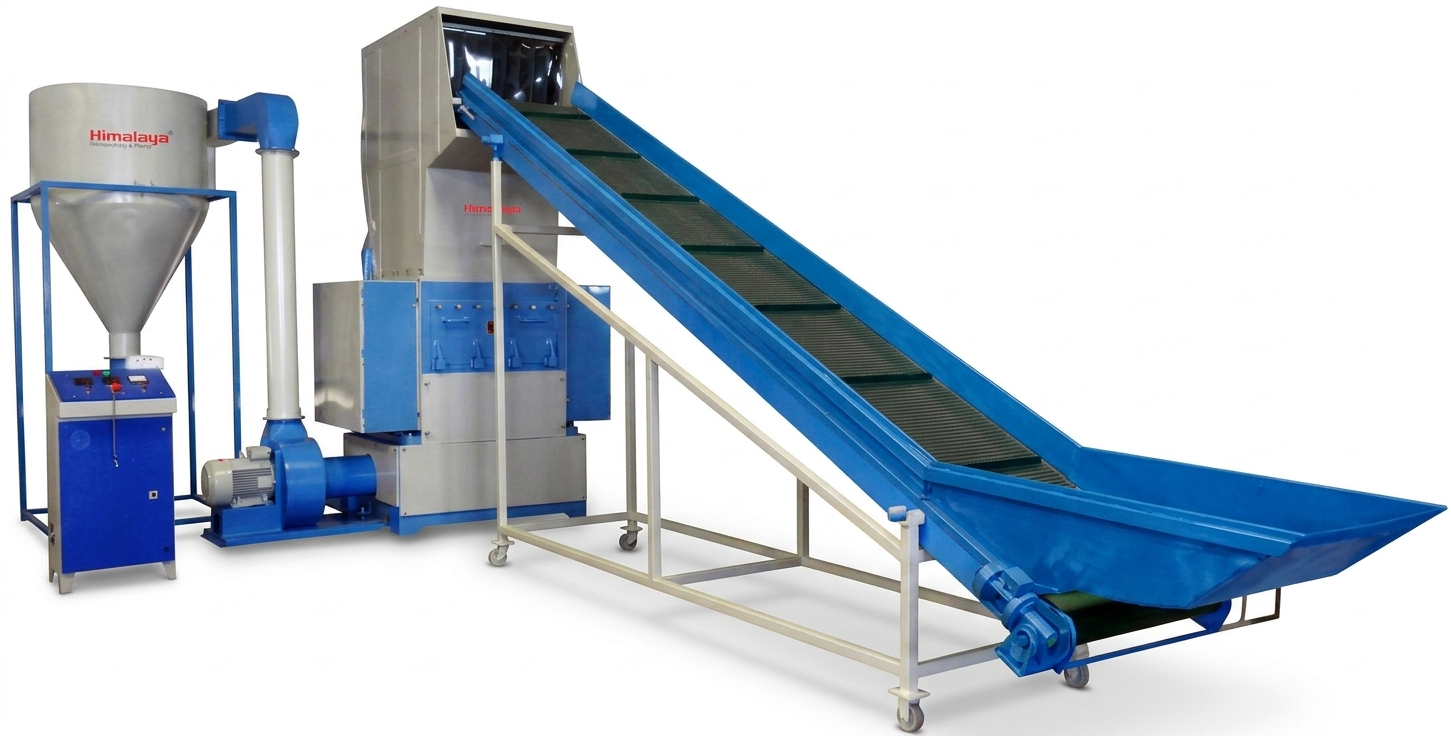
A granulator is a long-term investment. Choose a manufacturer that provides readily available spare parts, technical support, and maintenance services. Himalaya Granulator offers pan-India support with a comprehensive spare parts inventory.
Conclusion
The right granulator transforms your recycling operation, improving throughput, granule quality, and profitability. Take the time to assess your material, volume, and operational requirements before making a decision.
Need help selecting the perfect granulator for your plant? Talk to our experts at Himalaya Granulator for a free consultation.